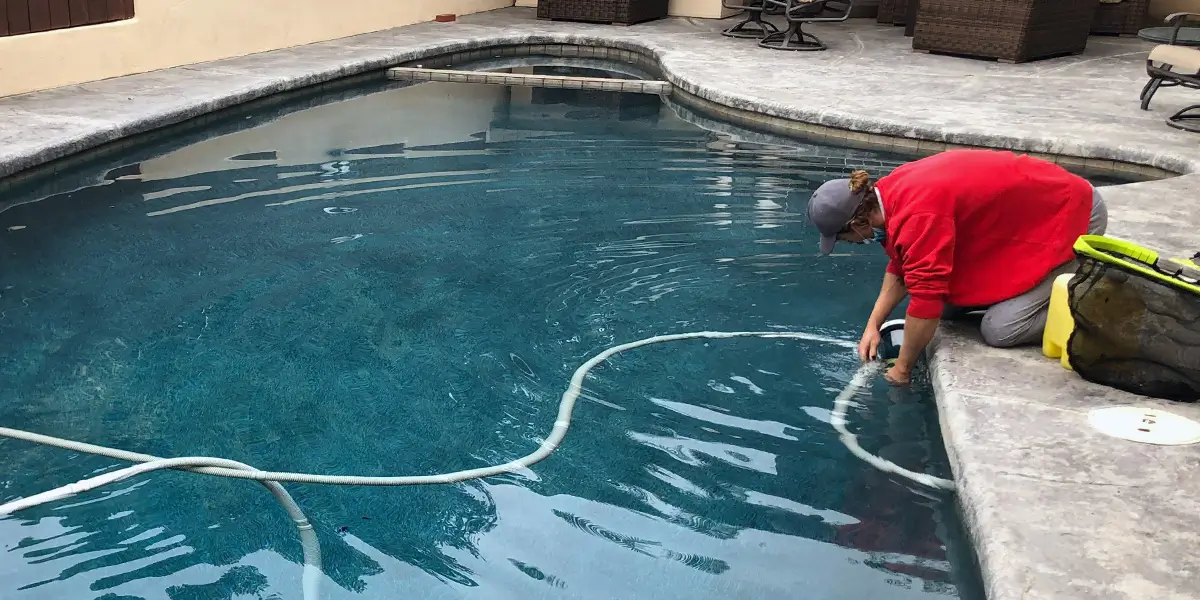
Although heavy rain isn’t common in San Diego County, when it does occur it can quickly disrupt pool water chemistry. Even short storms can dilute chemicals, introduce contaminants, and create water quality problems if not corrected promptly.
Rain Dilutes Pool Chemicals and Reduces Sanitization
Rainwater contains virtually no chlorine, stabilizer, or alkalinity. When it enters a pool, it lowers sanitizer levels and can shift pH and alkalinity out of balance. This dilution weakens sanitation at the exact time the pool is receiving more contamination from the surrounding environment.
In most cases, restoring proper balance requires professional adjustment through routine pool cleaning and maintenance services to ensure sanitizer levels, pH, and overall water chemistry are safely corrected.
Organic Debris Leads to Disinfection Byproducts
Beyond dilution, rain introduces dirt, pollen, leaves, and other organic material into the pool. As this debris breaks down, bacteria consume it and chlorine reacts with the organic waste. This reaction increases chlorine demand and leads to the formation of disinfection byproducts such as chloramines, which cause strong odors, eye irritation, and cloudy water.
Even if debris is removed quickly, microscopic organic particles remain and continue to impact water quality unless properly filtered and treated.
In situations where filtration systems struggle to keep up after storms, additional attention to system performance may be required, including equipment repair and upgrade services to restore proper circulation, filtration efficiency, and overall system function.
Why Filtration Time Should Be Increased After Rain
After heavy rain, pools in San Diego often require longer filtration cycles. Extended run times allow filters to remove fine debris and suspended particles before they degrade further. Without increased filtration, contaminants remain in circulation, making it harder for chlorine to maintain clean, clear water.
Post-Rain Treatments That Restore Water Balance
Storm-related contamination often raises phosphate levels, which can fuel algae growth. Phosphate removers help limit this risk. Enzymes assist by breaking down oils and organic waste without consuming chlorine, reducing sanitizer demand. Clarifiers improve filtration efficiency by helping filters capture fine particles more effectively.
Shocking the pool is typically necessary after rain to oxidize organic contaminants and eliminate chloramines. This restores chlorine efficiency and improves overall water clarity.
Keeping San Diego Pools Clear After Storms
Low chlorine levels, cloudy water, algae growth, and strong chlorine odors are common after rain in San Diego County. These issues are best resolved through a combination of extended filtration, balanced chemistry, and targeted treatments rather than simply adding more chlorine.
For professional help with post-rain pool care, Golden State Pools provides expert San Diego County pool maintenance and water chemistry services. Our team understands local conditions and knows how to restore pools quickly and safely after storms. After a heavy rain, a little attention goes a long way. Taking proactive steps now can help protect your pool, avoid costly repairs, and ensure it’s ready whenever you are. If you’re unsure where to start, a professional assessment can make post-rain pool care simple and stress-free.
Executive Summary
Heavy rain may be rare in San Diego County, but when it happens, it can quickly throw pool water chemistry out of balance. Rainwater dilutes chlorine and other essential chemicals while washing dirt, pollen, and organic debris into your pool. This combination often leads to cloudy water, strong chlorine smells, algae growth, and unsafe swimming conditions. Proper post-rain pool care—including extended filtration, water balancing, and targeted treatments—is essential to restore water clarity and protect your pool. Understanding how rain affects your pool helps San Diego homeowners prevent costly problems and keep their pools clean, safe, and swim-ready year-round.
If your pool has taken a hit after recent rain, don’t worry—we’re here to help. A quick professional check can restore balance fast and prevent bigger issues down the line, so you can get back to enjoying a clean, safe, swim-ready pool with confidence.
Balancing pool water chemistry involves restoring proper levels of pH, chlorine, and alkalinity so the water remains safe, clear, and stable. After disturbances like heavy rain, it’s important to test the water first and adjust chemicals gradually based on the results. In most cases, pH and chlorine levels are the first to shift, so these should be corrected before fine-tuning overall balance. Regular testing and small, controlled adjustments help maintain consistent water quality and prevent long-term issues.
Maintaining pool water chemistry requires consistent monitoring and routine upkeep rather than reactive treatment. This includes testing the water at least once a week, maintaining proper chlorine levels, and keeping pH and alkalinity within recommended ranges. Skimming debris, running the filtration system regularly, and addressing imbalances early all help prevent larger fluctuations. Environmental factors like heat, sun exposure, and rainfall can also impact chemical stability, so adjustments should be made as conditions change.
Rain can significantly impact pool water chemistry by diluting chemical levels and introducing contaminants into the water. Heavy rainfall often lowers chlorine concentration, disrupts pH balance, and can increase the presence of organic debris or pollutants washed in from surrounding areas. In some cases, this can lead to cloudy water or reduced sanitization efficiency if not corrected promptly. Testing and rebalancing after rain events is essential to restoring proper water conditions and maintaining a safe swimming environment.